/2026-08-18/da22dc86-a87f-4a81-af7a-00b4ccaa156b%201.png?width=1280&name=da22dc86-a87f-4a81-af7a-00b4ccaa156b%201.png)
There’s something quite satisfying about fulfilling your first few eCommerce orders yourself.
Products neatly lined up. Boxes ready to go. Maybe some branded tissue paper (recyclable, of course). Someone sticks the first shipping label on slightly wonky, but nobody cares because you’ve made a sale.
Then you grow.
Ten orders become 100. One sales channel becomes four. You start selling internationally. Returns arrive at the same time as new stock. Someone mentions Black Friday and suddenly that spare room, office or small warehouse doesn’t feel quite so charming anymore.
It’s often around this point that growing brands start asking a fairly important question:
Should we keep fulfilment in-house or outsource to a third-party logistics (3PL) provider?
There’s no universal answer. Both models have advantages and the right choice depends on your order volumes, growth stage, internal capabilities, technology requirements and future plans.
In this guide, we’ll compare in-house and outsourced eCommerce fulfilment across cost, scalability, technology, customer experience and international growth to help you decide which model offers the best value for your business.
What is in-house eCommerce fulfilment?
In-house eCommerce fulfilment means your business manages its own fulfilment operation.
You’re responsible for everything from receiving and storing stock through to picking, packing, shipping and processing returns.
That usually means managing:
- Warehouse space
- Fulfilment staff
- Inventory
- Packaging
- Carrier relationships
- Warehouse technology
- Order processing
- Returns
For smaller brands, this can be relatively straightforward.
You have complete control over the operation and can create a highly personalised experience for customers.
But as order volumes grow, the infrastructure required to maintain that control grows too.
What is a 3PL order fulfilment service?
A third-party logistics provider manages some or all of your logistics and fulfilment operations on your behalf.
Instead of owning or leasing warehouse space and employing your own fulfilment team, you send inventory to the provider’s fulfilment centres.
The 3PL then manages activities such as:
- Receiving inventory
- Storage
- Pick and pack
- Shipping
- Returns
- Inventory management
- Carrier selection
- Order tracking
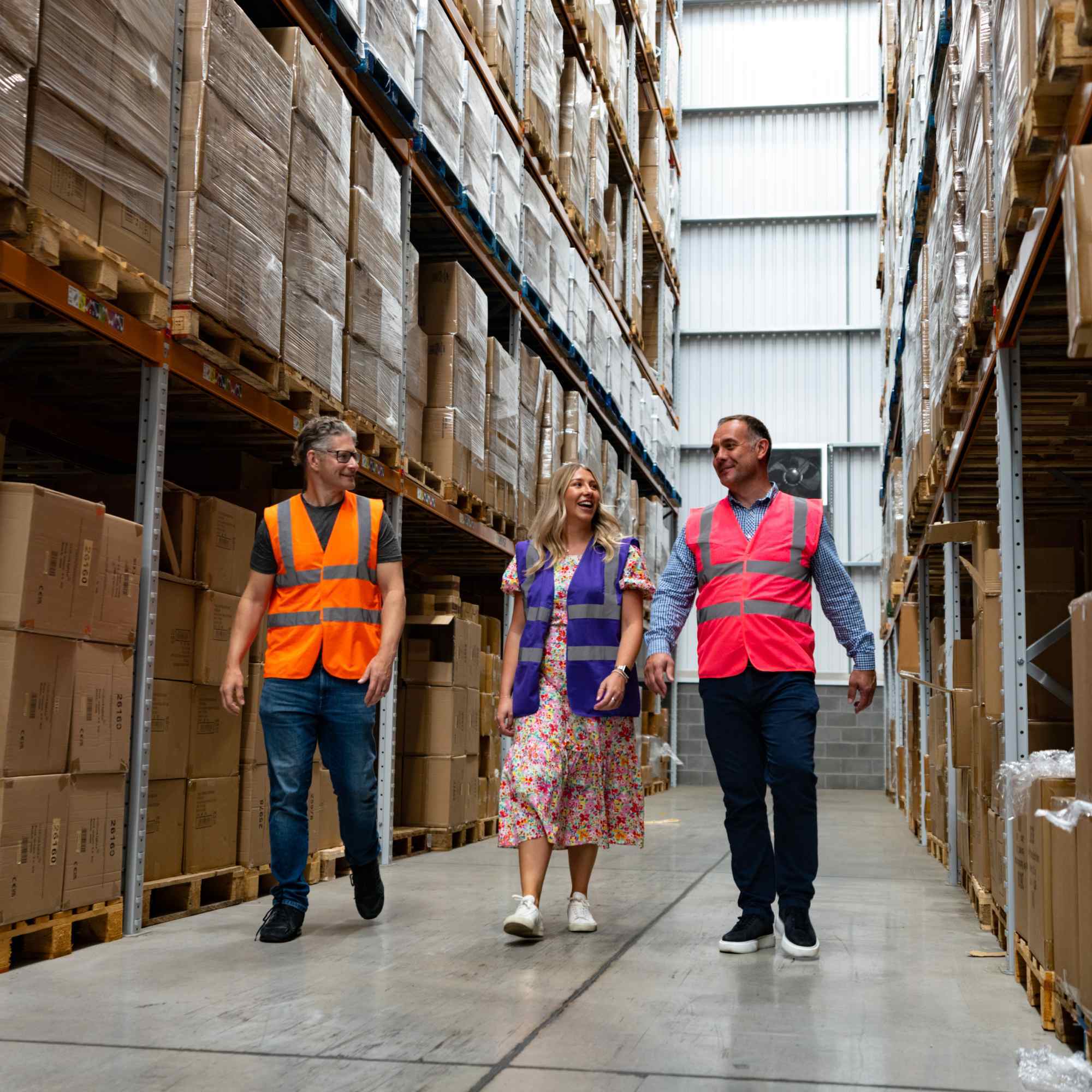
Modern eCommerce fulfilment services also typically include technology that integrates directly with your online stores, marketplaces and business systems.
Orders can flow automatically from your sales channels into the warehouse, while inventory and tracking information flows back again.
Essentially, you keep selling. Your 3PL handles what happens after somebody clicks ‘buy’.
In-house fulfilment vs. 3PL: What's the difference?
The fundamental difference is ownership.
With in-house fulfilment, you own and manage the infrastructure, people, technology and processes required to fulfil orders.
With a 3PL, much of that infrastructure is provided as a service.
Neither approach is inherently better.
The question is which one provides the right combination of control, cost and scalability for your current stage of growth.
And importantly, your answer today might not be the same in two years’ time.
1. Comparing fulfilment costs
Cost is usually one of the first considerations when comparing the two models.
At lower order volumes, fulfilling orders internally can appear considerably cheaper.
If you already have space, a small team and relatively straightforward shipping requirements, outsourcing may introduce costs you don't currently need.
But as your business grows, the true cost of in-house fulfilment becomes more complicated.
In-house costs can include:
- Warehouse rent
- Business rates
- Utilities
- Warehouse staff
- Recruitment
- Training
- Equipment
- Packaging
- Insurance
- Warehouse technology
- Carrier contracts
- Maintenance
- Peak-season temporary labour
Some are fixed costs regardless of whether you ship 5,000 orders that month or 500.
An outsourced order fulfilment service generally converts more of these expenses into variable costs linked to actual activity.
That can make costs easier to scale alongside order volumes.
Look at total cost, not just pick fees
When comparing eCommerce fulfilment services, it’s easy to look at the pick-and-pack price and decide whether outsourcing appears expensive.
But that's not necessarily a fair comparison.
Compare the total cost of fulfilment.
That means including your internal management time, warehouse overheads, technology investment, recruitment and the cost of mistakes.
The cheapest-looking option on a spreadsheet isn't always the cheapest once everything else joins the party.
2. Control over the customer experience
One of the strongest arguments for keeping fulfilment in-house is control.
You determine:
- How orders are packed
- Which packaging is used
- How quickly orders are processed
- How returns are handled
- How unusual requests are managed
For brands offering highly personalised or bespoke products, that control can be valuable.
However, outsourcing doesn't necessarily mean sacrificing your brand experience.
Many eCommerce fulfilment solutions now support:
- Branded packaging
- Custom inserts
- Gift messages
- Subscription boxes
- Kitting
- Personalised packing requirements
The important thing is understanding what your prospective provider can support before making a decision.

3. Scalability
This is where the differences between the two models often become much clearer.
Scaling an in-house operation requires physical resources.
More orders may mean:
- More warehouse space
- More shelving
- More equipment
- More employees
- More management
- More technology
And unfortunately, warehouses aren't particularly good at expanding themselves overnight.
A 3PL already has fulfilment infrastructure in place, allowing brands to access additional capacity without building it themselves.
This can be particularly useful for businesses experiencing:
- Rapid growth
- Seasonal demand
- Major product launches
- Marketplace expansion
- Promotional spikes
The right provider should be able to scale capacity alongside demand without requiring you to make major infrastructure investments every time the business grows.
4. Managing peak trading
Peak trading deserves its own mention because it can completely change the economics of fulfilment.
Black Friday. Christmas. Product launches. Influencer campaigns. The social post that unexpectedly sends half the internet to your website.
It’s enough to give anyone a headache.
An in-house team needs enough capacity to manage peak demand while avoiding excessive unused capacity during quieter months, and that balance isn't always easy.
3PLs typically manage fulfilment for multiple clients, allowing labour, technology and warehouse capacity to be deployed more flexibly.
When comparing eCommerce fulfilment services, ask potential providers about their peak planning process, historical performance and how additional capacity is allocated.
5. Technology and integrations
Technology has become central to modern eCommerce fulfilment.
Growing brands increasingly need:
- Real-time inventory visibility
- Order tracking
- Warehouse Management Systems (WMS)
- Marketplace integrations
- Reporting dashboards
- ERP integrations
- Carrier management
- Returns visibility
Building and maintaining this infrastructure internally requires investment.
For larger brands, owning that technology stack may make commercial sense. For others, accessing it through a 3PL can be considerably more efficient.
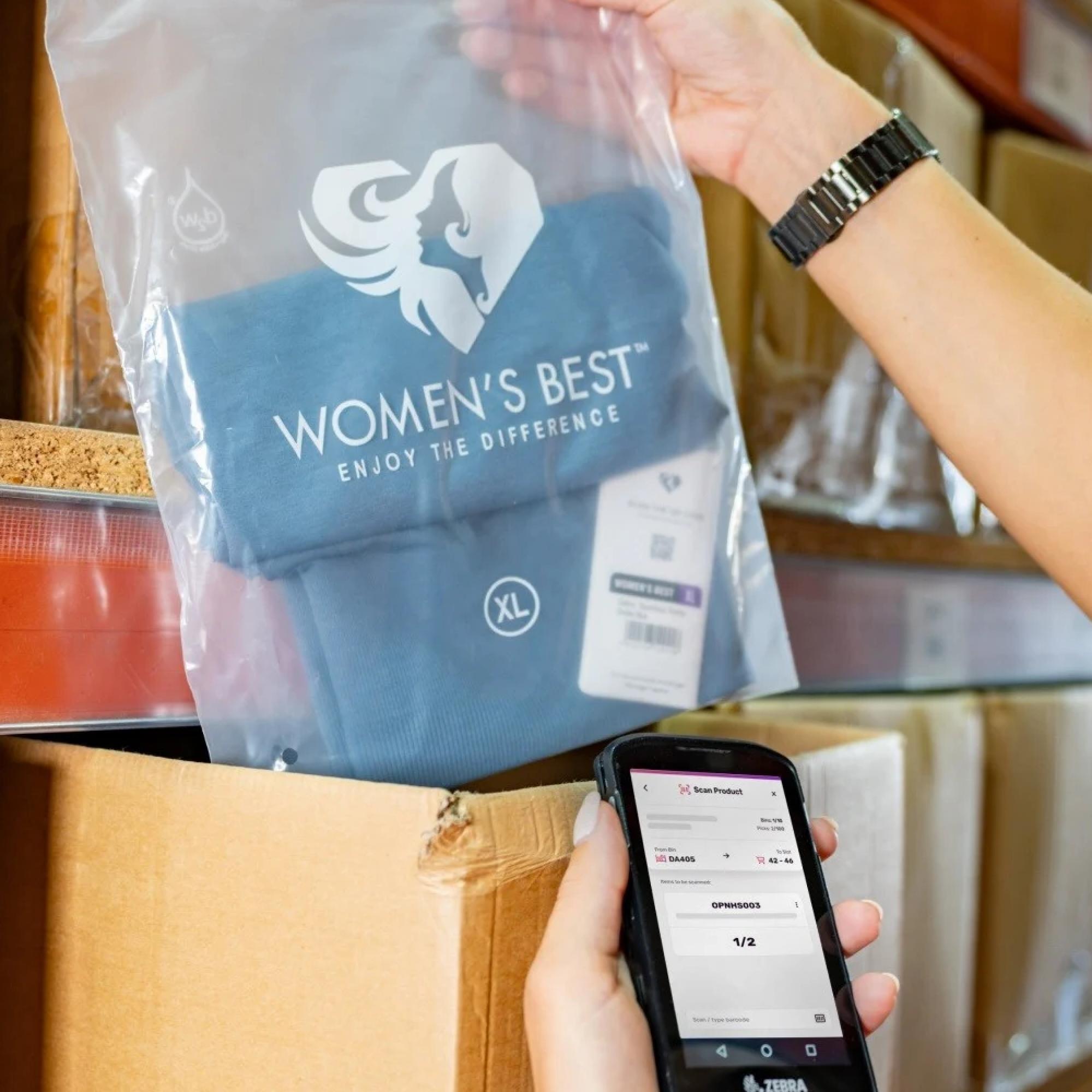
Many modern eCommerce fulfilment solutions connect directly with platforms including Shopify, Amazon, TikTok Shop and ERP systems, allowing data to move automatically between sales and fulfilment operations.
Because nobody scales an eCommerce brand so they can spend more time downloading CSV files.
/2026-08-18/18-08%20-%20Blog%20-%20Graphic-1.png?width=760&height=760&name=18-08%20-%20Blog%20-%20Graphic-1.png)
6. Inventory visibility
Outsourcing inventory doesn't mean losing sight of it.
Or at least, it shouldn't.
Modern 3PL technology can provide real-time visibility into:
- Available inventory
- Stock movements
- Orders
- Returns
- Dispatches
- Warehouse locations
This allows eCommerce teams to make purchasing, marketing and forecasting decisions using current inventory information.
If you're evaluating providers, ask to see their technology rather than simply asking whether they offer inventory tracking.
There can be quite a difference between ‘yes, we have a portal’ and genuinely useful real-time visibility.
7. Carrier access and delivery performance
Managing fulfilment internally means managing your own carrier relationships.
That gives you control but may limit your negotiating power, particularly at lower shipping volumes.
3PL providers aggregate shipping volumes across multiple customers, which can give them access to wider carrier networks and more competitive shipping options.
A multi-carrier strategy can also help businesses select services based on:
- Destination
- Cost
- Delivery speed
- Parcel size
- Service performance
This reduces dependence on a single carrier and can create greater flexibility as the business grows.
8. International and cross-border fulfilment
International growth is often the point where fulfilment becomes noticeably more complicated.
Selling abroad can introduce:
- Customs requirements
- Duties and taxes
- International carrier management
- Longer delivery times
- Cross-border returns
- Local customer expectations
You can absolutely manage this internally.
The question is whether building that capability represents the best use of your resources.
Some 3PL providers offer international fulfilment networks that allow brands to position inventory closer to customers.
Localising inventory can help reduce delivery times, control shipping costs and simplify returns as international demand increases.
For a brand planning serious international expansion, global infrastructure should therefore form part of the 3PL evaluation process.

9. People and expertise
There's another cost that's easy to overlook: expertise.
Running an increasingly complex fulfilment operation requires people who understand:
- Warehouse operations
- Inventory management
- Carrier performance
- Health and safety
- Technology
- Returns
- International shipping
Building that knowledge internally takes time and investment.
An established 3PL gives businesses access to logistics expertise without needing to build an entire logistics department themselves.
That doesn't mean outsourcing responsibility.
You should still understand your operation and monitor performance closely.
It simply means your marketing team probably doesn't need to become accidental warehouse experts too.
10. Returns management
Returns are an unavoidable part of eCommerce fulfilment, particularly in sectors such as fashion.
A strong returns process needs to:
- Receive the returned item
- Identify the order
- Inspect the product
- Determine its condition
- Update inventory
- Return sellable products to stock quickly
Poor returns management can leave valuable inventory sitting unavailable while customers wait for refunds.
Whether you're fulfilling internally or using a 3PL, assess returns as part of the complete fulfilment process rather than an afterthought.
When does in-house fulfilment make sense?
In-house fulfilment can be a strong choice when:
- Order volumes remain manageable
- You have existing warehouse capacity
- Your products require unusual handling
- Highly personalised packing is central to your proposition
- You have strong internal logistics expertise
- You want complete operational control
For some brands, keeping fulfilment in-house indefinitely is absolutely the right decision.
Outsourcing shouldn't be treated as an inevitable milestone.
It should solve a genuine business need.
When should you consider a 3PL?
A 3PL may become more attractive when:
- Order volumes are increasing rapidly
- Fulfilment is consuming too much internal time
- You need more warehouse capacity
- Peak trading is difficult to resource
- You're expanding internationally
- You're adding marketplaces or sales channels
- You need stronger fulfilment technology
- Shipping costs are becoming difficult to control
Another useful question is:
Is fulfilment helping us grow or distracting us from growth?
If increasingly large amounts of internal time and capital are being spent simply keeping orders moving, outsourcing may deserve serious consideration.
How to compare eCommerce fulfilment services
If you decide to explore outsourcing, don't simply request prices from five providers and choose the cheapest.
Evaluate each potential partner across:
- Total cost
- Technology
- Integrations
- Inventory visibility
- Order accuracy
- Delivery performance
- Returns
- Customer support
- Warehouse locations
- International capabilities
- Peak scalability
Ask for service-level commitments and understand exactly how performance is measured.
Most importantly, consider where your business is heading.
A provider that fits perfectly at your current volume may not necessarily be the one that supports your next stage of growth.
In-house fulfilment vs. 3PL: A quick comparison
In-house fulfilment
Can offer greater direct control and flexibility over bespoke processes. It may also be cost-effective at lower volumes or where warehouse infrastructure already exists.
However, scaling requires additional investment in property, people, technology and operational expertise.
3PL fulfilment
Provides access to existing warehouse infrastructure, technology, carrier networks and logistics expertise.
Costs may initially appear higher for some businesses, but a 3PL can reduce capital requirements and provide greater flexibility as order volumes, channels and geographic reach increase.
Ultimately, the best value isn't necessarily about whichever option costs less today.
It's about which model best supports the business you're building.
Final thoughts
There’s no magic order volume at which every eCommerce business should suddenly outsource fulfilment.
The right decision depends on your business model, margins, products, growth plans and internal capabilities.
For some businesses, maintaining in-house fulfilment provides exactly the control they need.
For others, outsourcing to an order fulfilment service removes operational complexity and provides access to technology, infrastructure and expertise that would be expensive to recreate internally.
The key is evaluating the total value of each model rather than comparing one fulfilment fee against another.
Because ultimately, good eCommerce fulfilment should give your business room to grow.