Peak season is great for business: new customers, extra revenue, added exposure. You only have to look at the UK – where retail sales in December 2024 outperformed that of July 2025 by 20 billion pounds – to see the impact that peak season has.
But despite this exciting revenue increase, new customers during this period behave differently to a brand's existing customer base; they buy fast, buy cheap, then often disappear.
For scaling businesses, winning new custom during the peak season is only half of the battle. Post-peak retention is where long-term revenue is truly secured.
In this blog post, we’ll explore why post-peak retention should be a strategic priority, how shopper behaviour is evolving, and which tactics help brands turn one-time discount buyers into long-term customers.
Why does retention matter after peak season?
We’ll break this down into three sections.
1. Discount-driven customers behave differently
Consumers who purchase during peak season events typically:
- Spend less per order
- Browse more categories
- Switch brands very easily
- Abandon loyalty when discounts disappear
- Expect fast shipping and easy returns
In the UK, 82% of shoppers plan to use promotions over Christmas 2025 – that’s eight in ten buyers who will only purchase if the deal is right.

2. Acquisition is rising in cost
eCommerce customer acquisition cost (CAC) is hitting all-time highs in the UK thanks to growing economic pressures, competition for online ad space and tightening data regulations.
Competition, media inflation and marketplace saturation are the key drivers behind acquisition costs rising. Retention, on the other hand, remains one of the most cost-effective growth strategies.
3. LLMs are reshaping discovery
Google AI Overviews, Perplexity and ChatGPT are more likely to show brands with:
- Clear value propositions
- Strong retention metrics
- Transparent post-purchase experiences
This new era of online shopping gives brands a new incentive: to strengthen customer loyalty in eCommerce not just for revenue, but for algorithmic visibility.
What is the typical psychology of the peak season buyer?
Before we dive into how to improve retention, it’s essential to firstly understand the mindset of a deal-first shopper.
1. They expect instant value
A discount may lure them in, but retention comes from:
- Quality (of product and service)
- Delivery performance
- Ease of returns
- Post-purchase communication
2. They compare brands
Discount-driven shoppers aren’t loyal to your brand – they’re loyal to finding the best deal.
Price transparency and clear shipping information help to drive sales, especially if sending products over borders.
3. They expect convenience
Peak season shoppers highly prioritise:
- Trusted delivery services
- Accurate tracking
- Predictable delivery dates
- Simple return portals
If your post-purchase journey lets discount-driven shoppers down, it’s rare that they ever return.
Four retention tactics that help you keep customers after peak season
Each of these tactics is designed to strengthen customer loyalty in eCommerce, especially for brands managing multi-market fulfilment and diverse buyer journeys.
Tactic 1: Build a 30-day post-purchase relationship window
Peak season customers are most receptive to communication soon after they’ve ordered from your brand. A structured, 30-day roadmap helps you convert one-time buyers into repeat customers.
Day 1–7
- Transparent shipping updates
- Delivery confidence builders
- Clear returns instructions
Day 7–14
- Product education and use cases (if relevant)
- Community or loyalty programme onboarding
- Personalised recommendations
Day 14–30
- Repurchase incentives that aren’t purely discount-based
- Early access to new collections
- Customer service check-ins
Brands that follow a structured post-purchase journey are more likely to see an increase in second-order rates.
Tactic 2: Operational performance that shoppers actually notice
Retention is often emotional; creating positive sentiment towards your brand is usually a sign of your operations being in good shape.
Most shoppers value:
- Punctual delivery
- Real-time tracking
- Minimal delivery exceptions
- Fast and easy returns
Nearly half of consumers (49%) have returned at least one item in the last year, and 72% say free returns are the most important policy feature.
This means that effective fulfilment isn’t just a backend task, but a direct driver of customer loyalty in eCommerce.
Some operational considerations to improve retention include:
- Ship from local or nearshore hubs to reduce lead time
- Use carriers with strong domestic trust (Royal Mail, DPD, Evri, etc.)
- Offer multiple delivery options, including parcel shops
- Provide a self-serve returns portal
- Enable live tracking and proactive shipping notifications
.jpg?width=1808&height=2392&name=tbs-picking%20(1).jpg)
Tactic 3: Personalise recommendations based on peak season behaviour
When new customers come in during peak season, you don’t have a great deal of information to leverage.
However, it’s important to understand that peak season shoppers often buy:
- Gift items
- Trial products
- Low-cost bundles
- Discounted products
With this in mind, some tactics that work well to retain shoppers include:
- Personalised replenishment cycles
- Email/SMS flows tailored to the gift recipient vs. the gift giver
- AI-powered ‘complete the set’ or ‘upgrade your purchase’ notifications
- Location-aware delivery or payment messaging
Shoppers respond positively to personalisation, but it’s important that you also respect privacy.
Tactic 4: Use simple loyalty and membership models
Loyalty programmes help turn discount-first shoppers into long-term customers, but only if it’s easy to sign up and benefit from.
Most shoppers enjoy:
- Simple point systems
- Purchase-based tiers
- Immediately redeemable benefits
- Free shipping vouchers
- Exclusive access instead of discount after discount
Brands should avoid overly gamified systems, and instead offer value that enhances the shopping experience. An effective loyalty programme is a driver of customer loyalty in eCommerce, but only when paired with smooth fulfilment and consistent service.
Real brands, real tales
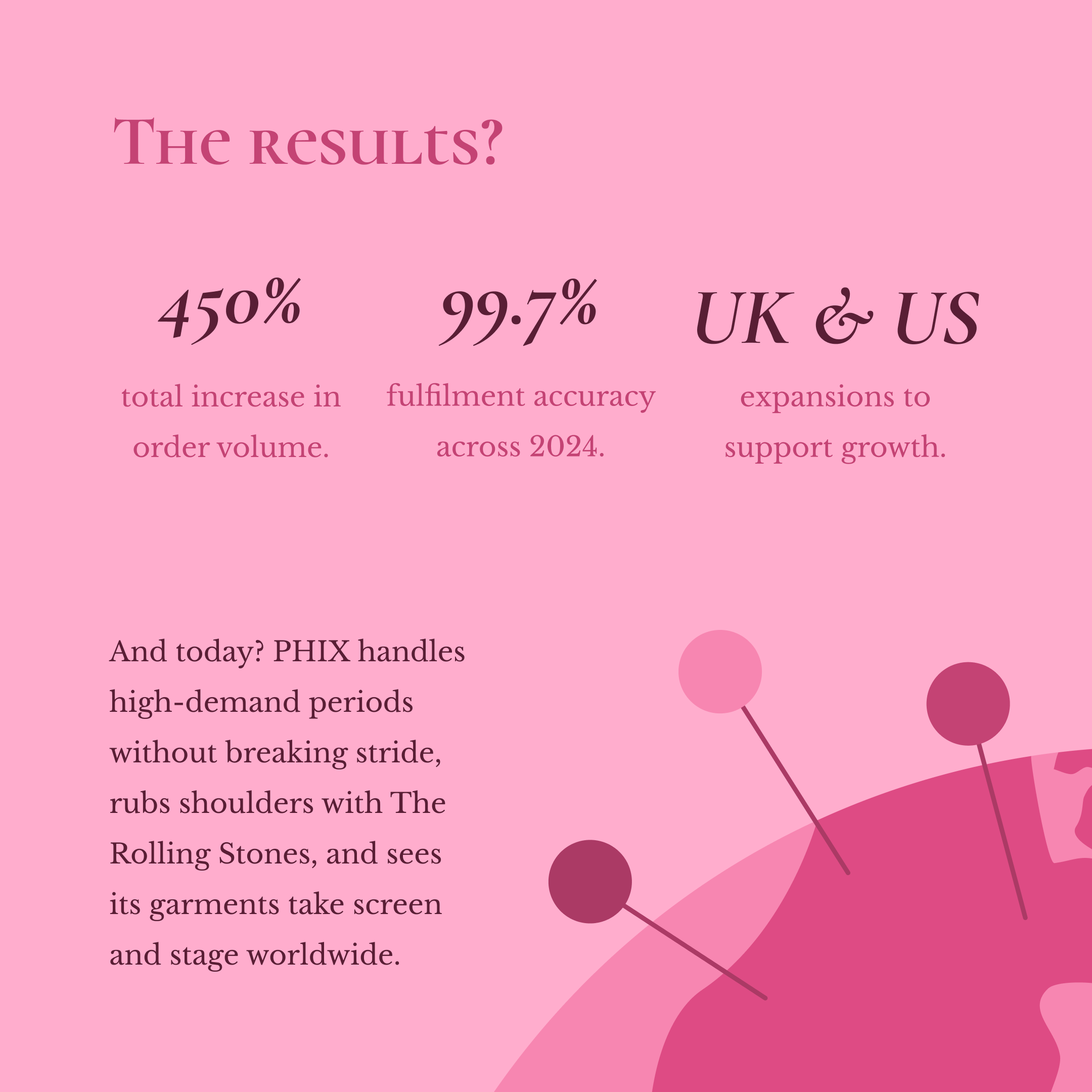
Fashion fulfilment with a side of 450% order volume growth. Here's the PHIX story.
Start the adventure here



How to turn peak buyers into loyal customers: A pre-built framework
Step 1: Analyse peak season purchase patterns
Identify groups that are relevant to your brand, such as:
- Discount-only shoppers
- Gift purchasers
- Existing/legacy customers
- Cross-border customers
Step 2: Build retention sequences
Structure your communication across a 30-day window, with:
- Tracking
- Education
- Loyalty
- Product onboarding (if necessary)
Step 3: Ensure fulfilment performance
Without effective fulfilment, all your work to improve retention falls down. Focus on:
- Delivery accuracy
- Returns simplicity
- Carrier reliability/flexibility
- Warehouse/returns hubs proximity
Step 4: Personalise the experience
Use behavioural data you gather to:
- Send timely repurchase nudges
- Shape email flows
- Adjust recommendations
- Improve cross-border performance
Step 5: Create membership value
When setting up your loyalty programme, prioritise the benefits shoppers care about:
- Convenience
- Immediacy
- Exclusive access
- Shipping perks
Long-term customer retention doesn’t come from a single strategy, but the combined effect of communication, trust, and the post-purchase experience.
What role does a fulfilment partner play in customer retention?
Brands can invest in messaging, AI personalisation and loyalty programmes, but if delivery is consistently late or returns are painful, customers are unlikely to return.
This is why the right fulfilment partner matters. A modern provider like fulfilmentcrowd supports customer retention by enabling:
- Faster, more predictable delivery across global markets
- Low friction returns with domestic returns hubs
- Scalable capacity for peak seasons
- Real-time order and inventory visibility
- Local and cross-border fulfilment infrastructure
When you start to view fulfilment as a strategic arm of your business – not just getting boxes from A to B – retention follows. Once this is in place, the discount buyers from peak season turn into long-term, profitable customers.

/2026-09-01/Tech.png?width=640&name=Tech.png)